
Manual vs Electric Dough Sheeter: Which Dough Roller Machine Is Better for You?
Manual vs Electric Dough Sheeter: Which Dough Roller Machine Is Better for You?
If you’re rolling pizza dough, pastry sheets, or croissant dough on a regular basis, consistency isn’t a “nice-to-have” — it’s the difference between clean results and a weekly mess. That’s why choosing the right dough sheeter matters.
There are two main types of dough roller machines: manual dough sheeters and electric dough sheeters. Both flatten dough using adjustable rollers — but the workflow, speed, and “who it’s for” are very different.
In this guide, you’ll get a clear manual vs electric dough sheeter comparison, plus real-world use cases (home kitchen, small bakery, pizza shop) so you don’t waste money or space.
👉 See all models in our dough sheeter machines collection.
Manual Dough Sheeter — How It Works & Who It’s For
What a Manual Dough Sheeter Is
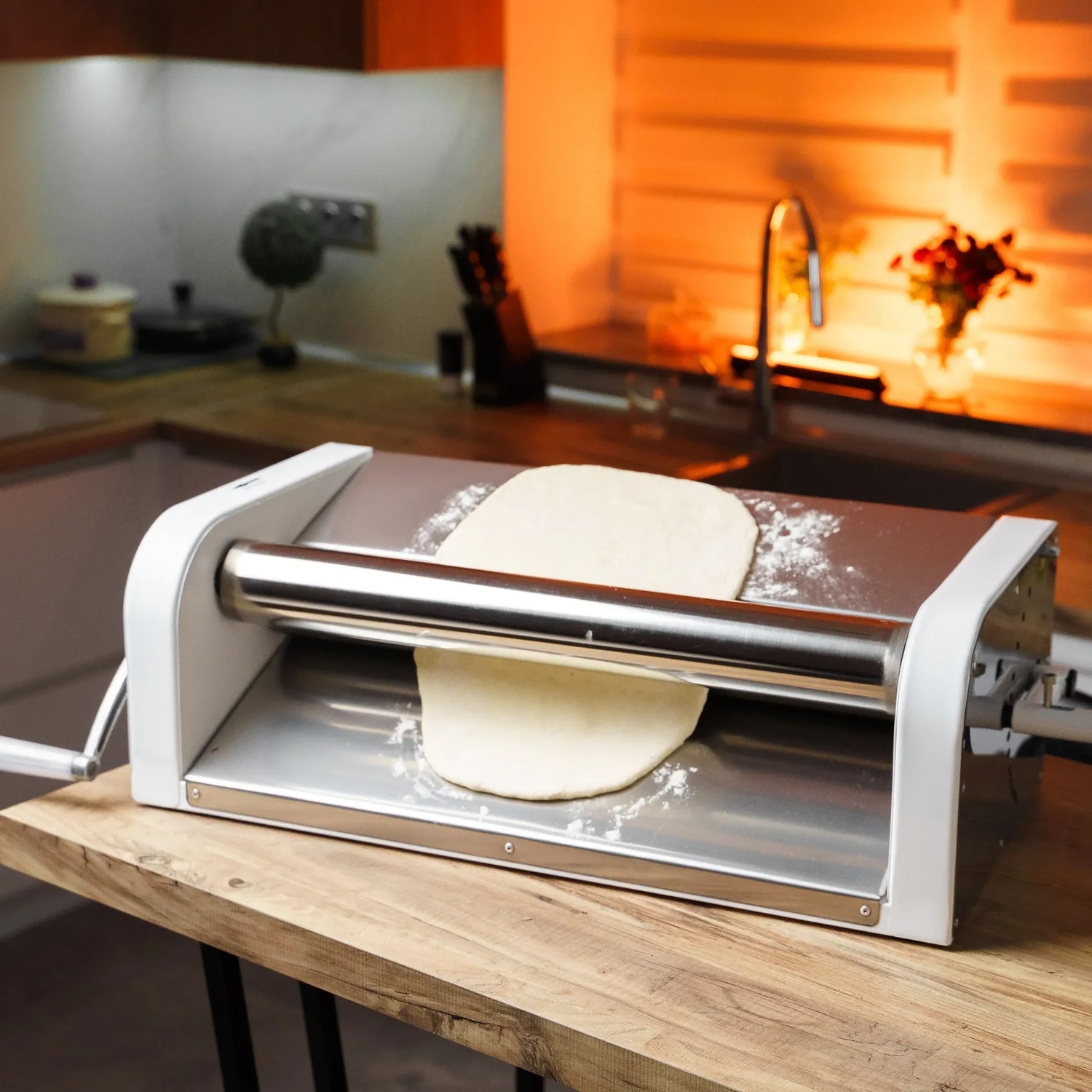
A manual dough sheeter is a hand-operated dough roller machine designed to roll dough into smooth, even sheets. You turn a crank handle that drives two stainless steel rollers, and you adjust thickness based on what you’re making (pizza, pastry, pasta, tortillas, etc.).
Because it doesn’t need power, it’s a strong fit for home kitchens, pop-ups, and mobile food setups — especially if you want a compact machine that’s easy to store.

Pros of a Manual Dough Sheeter
- ✅ Budget-friendly (usually the lowest-cost entry into dough sheeting)
- ✅ No electricity required (works anywhere)
- ✅ Quiet operation
- ✅ Lightweight and portable
- ✅ Simple mechanical design = fewer failure points
- ✅ Easy to clean (no motor area to worry about)
Cons of a Manual Dough Sheeter
- ❌ Requires physical effort (especially with stiff or cold dough)
- ❌ Slower for large batches
- ❌ Consistency depends more on your rhythm + repeated passes
- ❌ Not ideal if you’re doing laminated dough at volume every day
Best For
- Home bakers rolling dough a few times per week
- Small-batch pizza nights (consistent thickness without the workout)
- Pastry hobbyists
- Food trucks / mobile kitchens without reliable power
- Anyone who wants a space-saving dough roller machine
👉 View the Manual Dough Sheeter Machine
Electric Dough Sheeter — How It Works & Who It’s For
What an Electric Dough Sheeter Is
An electric dough sheeter uses a motor to power the rollers automatically. You set the thickness, feed the dough in, and the machine pulls it through at a consistent speed for repeatable, even sheets.
This is the best choice when speed + consistency matter every day: pizzerias, bakeries, restaurants, and any kitchen doing frequent prep.
Electric models also shine with laminated doughs (croissants, puff pastry) where thickness precision and repeatability are the whole game.

Pros of an Electric Dough Sheeter
- ✅ Fast, efficient, and automatic
- ✅ Excellent repeatable thickness (consistency is the point)
- ✅ Handles larger batches and daily production
- ✅ Great for laminated & delicate doughs
- ✅ Less fatigue (no cranking)
- ✅ Precise thickness control (example: 0.7 mm to ~20 mm depending on setup)
Cons of an Electric Dough Sheeter
- ❌ Higher upfront cost
- ❌ Needs power access (110V for many homes, 220V in some commercial setups)
- ❌ Heavier (typically stays on the counter)
- ❌ Some motor noise (usually low to moderate)
Best For
- Restaurants and pizzerias with daily dough prep
- Small to medium bakeries
- Croissant / puff pastry / laminated dough production
- Kitchens that value output, speed, and repeatable thickness
👉 View the Electric Dough Sheeter Machine
Manual vs Electric Dough Sheeter — Side-by-Side Comparison
|
Feature |
Manual Dough Sheeter |
Electric Dough Sheeter |
|
Speed |
Medium (depends on user) |
✅ Fast (motor-driven) |
|
Power |
✅ No electricity |
110V / 220V |
|
Best Use |
Home kitchens, small batches, mobile setups |
Daily production, bakeries, pizzerias |
|
Noise |
✅ Very quiet |
Low to moderate |
|
Consistency |
Good (more user-dependent) |
✅ Excellent (repeatable results) |
|
Portability |
✅ Easy to move/store |
Heavier, more “set-and-stay” |
|
Output Volume |
Low to medium |
✅ Medium to high |
|
Price |
✅ Lower |
Higher |
Bottom line: electric dough sheeters win on speed + repeatability; manual models win on portability + price.
Which One Should You Choose? (Simple Use Cases)
Choose a Manual Dough Sheeter If…
- You bake at home or prep dough in small batches
- You want a dough roller machine for home without needing a power outlet
- You want a lower-cost setup that still improves consistency
- You need portability (food truck, pop-up, shared kitchen space)
Choose an Electric Dough Sheeter If…
- You prep dough daily (pizza shop, bakery, restaurant)
- You want repeatable results for laminated dough (croissants, puff pastry)
- You care about speed, output, and minimizing manual labor
- You’re choosing a dough sheeter for home use but bake frequently and want “push-button consistency”
If you’re still torn, use the buyer’s guide that’s focused specifically on home bakers and small bakeries: best dough sheeter for home use (buyer’s guide).
Or just browse all models here: dough sheeter machines collection.
Dough Roller vs Dough Sheeter — Is There a Difference?
Most people use “dough roller machine” and “dough sheeter” interchangeably — and in countertop machines, they usually mean the same thing: rollers flatten dough to an adjustable thickness.
In some commercial contexts, “sheeter” can also refer to larger laminators with conveyor belts, but this guide focuses on compact countertop dough sheeter machines designed for home kitchens and small bakeries.
Price Differences: What You’re Really Paying For
The price gap between manual vs electric dough sheeters comes down to performance + components.
A manual dough sheeter costs less because it’s purely mechanical: no motor, fewer parts, lower weight. For home bakers who roll dough occasionally, it’s often the best value.
An electric dough sheeter costs more because it’s built for speed and repeatability: motor, reinforced build, and smoother workflow for daily use. In busy kitchens, the time saved usually pays back fast.
|
Machine Type |
Typical Price Level |
Why |
|
Manual |
Lower |
Mechanical design (no motor) |
|
Electric |
Medium–Higher |
Motor + higher daily output |
FAQ — Quick Answers
1) Is a manual dough sheeter good for pizza dough?
Yes. A manual dough sheeter is great for pizza dough in small batches — especially at home. You’ll get consistent thickness without needing power.
2) Is an electric dough sheeter worth it for home use?
If you bake frequently (multiple times per week), want repeatability, and hate the “rolling pin workout,” then yes — an electric dough sheeter for home use can be a legit upgrade.
3) Can an electric dough sheeter roll pastry and croissant dough?
Absolutely. Electric dough sheeter machines are especially helpful for laminated doughs like croissants and puff pastry because thickness control stays consistent across multiple passes.
4) Are manual dough rollers hard to use?
No. If you can turn a crank, you can use a manual dough roller. The only “hard part” is stiff dough — and that’s more about dough temperature + hydration than the machine.
5) What voltage do electric dough sheeters need?
Many electric models come in 110V (common for homes) and 220V (common for some commercial setups). Always confirm your kitchen power before choosing a model.
Ready to Compare Models?
Browse the full lineup here: dough sheeter machines collection.
If you want a “pick the best one” breakdown for home bakers and small bakeries, use this guide: best dough sheeter for home use.