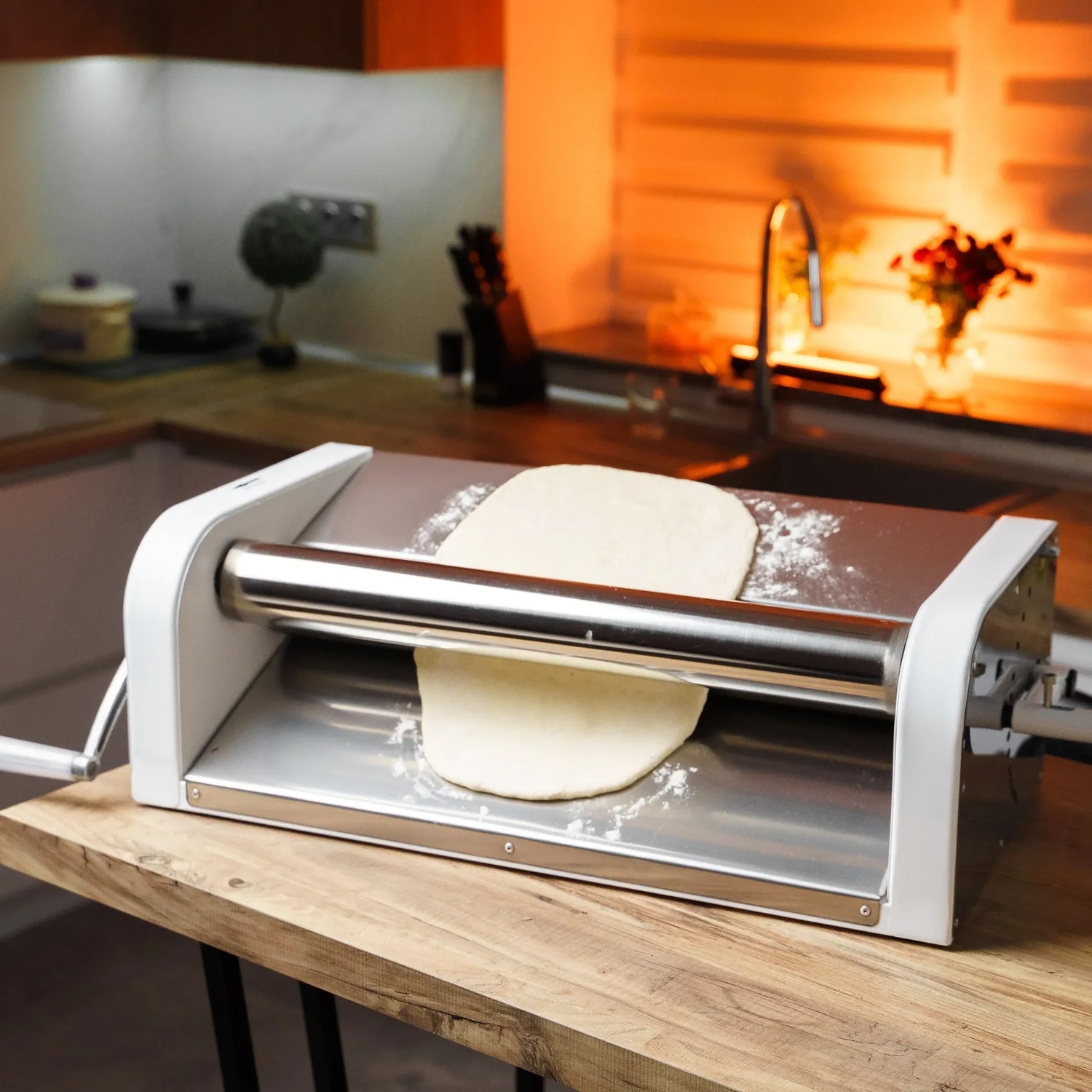

What Is a Dough Sheeter (and Dough Roller Machine) and How Does It Work?
What Problem Dough Sheeters Solve
For generations, bakers have rolled dough by hand — carefully flattening each piece with a rolling pin, using time, energy, and a bit of guesswork. While that method has worked for centuries, it’s far from efficient.
In today’s fast-paced world, we don’t have hours to spend rolling and re-rolling dough. We have businesses to run, orders to fulfill, families to feed, and a constant need to do more in less time. People expect speed and perfection — in the kitchen just as much as anywhere else. That’s why more and more bakers are turning to tools that deliver consistent, professional results without wasting time or effort.

A dough sheeter, also known as a dough roller machine, flattens dough between adjustable rollers, giving you smooth, even sheets in just seconds. No muscle strain. No second-guessing. Just fast, flawless dough — every single time.
You can explore different types of dough sheeter machines depending on your needs, whether you’re baking at home or running a commercial kitchen.
What Is a Dough Sheeter (and Dough Roller Machine)?
A dough sheeter, sometimes called a dough roller machine, is a piece of equipment that flattens dough into even sheets with speed and precision. It replaces the traditional rolling pin, saving time and effort — especially when working with large batches or delicate doughs.
The machine works by passing dough between two adjustable rollers. You simply set your desired thickness, place the dough in, and it comes out smooth, flat, and ready to use.

Whether you’re making pizza, pastry, croissants, pasta sheets, tortillas, or cookies, a dough roller machine ensures consistent thickness — which means better baking results and faster prep.
In simple words: You put in a dough ball, and get a perfect, even sheet — no rolling, no stress.
From home kitchens to busy bakeries, dough sheeters have become a must-have tool for anyone who wants speed, precision, and professional-level dough every time.
Types of Dough Sheeter Machines (Manual, Electric, Home, Commercial)
Manual Dough Sheeter Machines

A manual dough sheeter machine uses a hand-crank to roll dough through two adjustable rollers. It doesn’t require electricity, making it perfect for home kitchens, food trucks, market stalls, or bakeries that need portability and control.
Many bakers love the feel of manual sheeters — especially for pastry, pizza, and artisan bread — because you can fine-tune thickness and speed by hand. They’re compact, reliable, and ideal for small spaces or mobile setups.
👉 See our Manual Dough Sheeter Machine here
Electric Dough Sheeter Machines
 An electric dough sheeter machine does the work for you. With a built-in motor, it pulls the dough through automatically, giving you fast, consistent results without manual effort. It’s a game-changer for restaurants, bakeries, pizza shops, and commercial kitchens that need to produce dough all day long.
Electric sheeters are great for high-volume use and laminated doughs like croissants or puff pastry. You just set the thickness, press the switch, and let the rollers do the rest.
👉 Explore our Electric Dough Sheeter Machine here
Small / Home Dough Sheeters
If you bake at home or run a small operation, a small dough sheeter is a smart upgrade. These countertop models are compact but powerful, giving you the benefits of a professional machine without taking up too much space.
Perfect for pizza, pasta, pastry, and cookies, a dough sheeter for home brings commercial-level consistency to your kitchen — with less mess and no heavy lifting.
👉 See our Home Manual Dough Sheeter Machine here
Commercial Dough Sheeter Machines
 A commercial dough sheeter is built for serious output. These machines are heavy-duty, durable, and designed to run all day in bakeries, restaurants, and food production setups.
They handle large volumes of dough with ease and offer adjustable thickness, making them ideal for croissants, laminated dough, bread, and more. If your kitchen demands reliability and speed, a dough sheeter machine for bakery use is essential.
How Does a Dough Sheeter Work? (Step-by-Step Guide)
Using a dough sheeter is straightforward, whether you’re working with an electric or manual model. Here’s a step-by-step guide to how the process works — and why it saves so much time in the kitchen.

1. Prepare Your Dough
Before using the machine, your dough should be properly mixed, rested, and portioned. If it’s too sticky, dust it lightly with flour.
2. Set the Roller Gap (Thickness)
Adjust the roller gap using the side knobs or digital settings, depending on your machine. You can control how thick or thin the dough will be — most models range from 0.7 mm to 20 mm or more.
3. Feed the Dough Into the Rollers
Place your dough at the opening between the rollers. On manual machines, you’ll turn the hand crank. On electric models, just flip the switch — the rollers will automatically pull the dough through.
4. Reduce the Gap Gradually for Thinner Sheets
For delicate dough like pastry or pasta, start with a wider setting, then reduce the thickness step-by-step. This keeps the dough smooth and prevents tearing.
5. Use or Cut the Sheet as Needed
Once rolled, your dough is ready for shaping, cutting, or layering — whether you’re making pizza bases, puff pastry, pasta sheets, or croissants.
How does a dough sheeter work — in simple terms?
It flattens dough between two rollers, with adjustable settings for perfect thickness every time. No manual pressure needed.
Whether you’re working in a bakery or your own kitchen, understanding how a dough roller machine works means you’ll spend less time prepping — and more time baking.
What You Can Use a Dough Sheeter For
 A dough sheeter isn’t just for one kind of dough — it’s an incredibly versatile tool that can handle everything from thin pasta sheets to buttery croissants. Here’s what you can use it for:
-
Pizza Dough
A pizza dough sheeter helps you roll out uniform crusts quickly — ideal for pizzerias or home cooks who want consistent thickness and perfect circles.
-
Pastry & Laminated Dough
Use a pastry dough sheeter for puff pastry, Danish dough, and other laminated recipes. The rollers evenly press butter layers without melting or tearing the dough.
-
Croissant Dough
Croissants need precise lamination. A dough sheeter ensures each fold is rolled smoothly for those perfect, flaky layers.
-
Pasta Sheets
For fresh pasta like lasagna or ravioli, a sheeter gives you long, even pasta dough sheets without breaking or stretching unevenly.
-
Tortillas, Flatbreads, Chapati, Roti
Whether you’re making flour tortillas or Indian flatbreads, sheeters produce consistent shapes and save time during high-volume prep.
-
Cookie Dough
A dough sheeter makes rolling out cookie dough fast and clean — no flour clouds or uneven edges.
Whether you’re baking at home or prepping for a busy service, a dough sheeter streamlines the process and helps you produce high-quality dough products every time.
Dough Sheeter vs Dough Roller vs Rolling Pin
Dough Sheeter vs Dough Roller Machine
The terms dough sheeter and dough roller machine are often used interchangeably — and in many cases, they refer to the same type of equipment. However, there can be subtle differences depending on context.
A dough sheeter usually refers to machines with adjustable rollers designed to flatten dough to specific thicknesses, often used for pastry, croissants, and pizza. A dough roller machine, on the other hand, might refer to simpler devices with fixed roller pressure — often found in basic models or pasta makers.
So while the terms overlap, a dough sheeter typically offers more control and precision. If you’re comparing dough sheeter vs dough roller, think of the sheeter as the more advanced, versatile version.
Dough Sheeter vs Rolling Pin

This one’s easy: a dough sheeter outperforms a rolling pin in almost every way.
A rolling pin requires strength, patience, and skill — and even then, it’s hard to get consistent thickness. One section might be too thick, another too thin. That means uneven baking, wasted dough, and slower production.
A dough sheeter, by contrast, gives you repeatable, accurate results in seconds. Whether you’re making one batch or a hundred, your dough will come out flat, smooth, and exactly the same every time — no effort, no guesswork.
So when it comes to dough sheeter vs rolling pin, the choice is clear for anyone who values speed and consistency.
How to Choose the Right Dough Sheeter (Home vs Commercial)
Most dough sheeter machines can work in both home and commercial kitchens — but the best choice depends on how much you bake, how often, and what kind of space or setup you have.
Here’s how to choose the right one for your needs:
✔ For Home Use
If you bake at home, run a food truck, or prep smaller batches, a manual or compact electric dough sheeter is often the perfect choice. These machines are:
- Easy to use and clean
- Compact enough for countertops
- Great for pizza, pasta, pastry, cookies, and croissants
- Available in 110V for standard home outlets
Even if you’re baking frequently, you don’t need industrial size — a small dough sheeter gives you consistent, professional results without taking over your kitchen.
✔ For Commercial Use
If you’re operating a bakery, pizzeria, or restaurant with high daily volume, you’ll want something built for performance and durability.
A commercial dough sheeter machine offers:
- Larger rollers (usually 19.7” wide or more) for high output
- Faster operation with a powerful electric motor
- Better suited for laminated doughs, large pastry sheets, and batch production
- These machines are ideal when speed, consistency, and reliability are non-negotiable.
✅ Quick tip: Even if you’re a home baker, don’t overlook commercial machines if you’re producing in large batches — they’re compact enough to fit, but powerful enough to handle heavy use.
👉 Browse our Manual and Electric Dough Sheeter Machines here to compare models for home and commercial use.
FAQ — Quick Answers
1. Is a dough sheeter worth it for home baking?
Yes — especially if you bake regularly. A dough sheeter for home saves time, ensures even thickness, and delivers more professional results than a rolling pin.
2. Can I use a dough sheeter for pizza, pastry, croissants, and pasta?
Absolutely. Whether you’re rolling pizza bases, laminated dough for croissants, or thin pasta sheets, a dough roller machine gives consistent, smooth results across all dough types.
3. What’s the difference between a dough sheeter and a dough roller machine?
The terms are often used interchangeably. Technically, a dough sheeter offers more precision with adjustable thickness settings, while dough roller machines may be simpler or less adjustable.
4. How hard is it to clean a dough sheeter?
Not hard at all. Most models have stainless steel rollers and a simple design — just wipe down the surfaces after use. No complex disassembly needed.
5. Can a dough sheeter fully replace a rolling pin?
Yes — for most bakers, it does. A sheeter is faster, more consistent, and far easier on your hands, especially when working with tougher or delicate doughs.