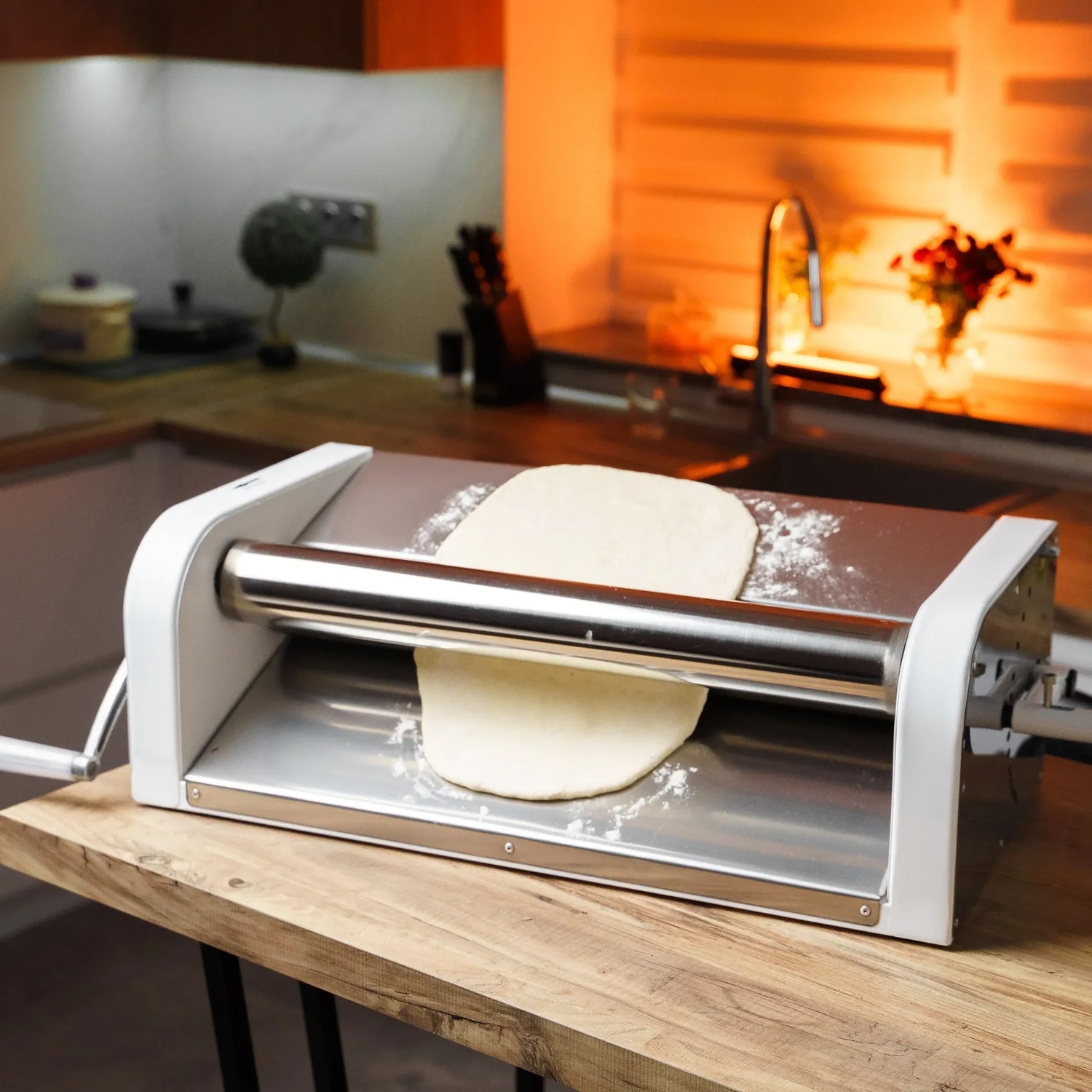


Dough Sheeter Thickness Guide: Ideal Settings for Pizza, Croissants, Pasta & Bread
Ask any experienced baker — dough thickness can make or break your final product.
Too thick? Your pizza ends up chewy with an undercooked center.
Too thin? Your croissants leak butter or your pasta tears during boiling.
Whether you’re baking artisan bread at home or prepping dozens of pastries in a small bakery, consistent dough thickness is key to texture, flavor, and bake quality. And the best way to get there? A dough sheeter.
But here’s the problem: many people buy a dough roller machine… then guess at the settings. This guide changes that.
In this step-by-step dough sheeter thickness guide, we’ll walk through:
- 📏 Exact thickness settings for pizza, croissants, puff pastry, pasta, and flatbreads
- ⚙️ How to understand and adjust your machine’s roller settings (in mm and inches)
- ✅ Pro tips to get the most consistent dough every time — whether you’re using a manual or electric dough sheeter
This guide is based on real use with compact countertop dough sheeter machines, like those we recommend for home bakers and small bakeries.
👉 See all dough sheeter machines here
How Dough Sheeter Thickness Settings Work
Millimeters, Inches & Dial Numbers — What You Need to Know
Most dough sheeters adjust thickness by changing the gap between two rollers.
Turn a knob (manual) or push a button (electric), and you control how thin the dough gets as it passes through.
But here’s where many people get confused:
Each brand uses its own dial numbers. One machine’s “Setting 2” might be 2 mm — while another machine’s “2” might be 4 mm. That’s why the best way to work is by actual thickness in millimeters (mm) or inches.
Here’s how to dial it in:
- Use a ruler or digital caliper to measure a test sheet
- Record that measurement in millimeters first (we’ll include inches too)
- Match it to your ideal range in the guide below
Most compact dough sheeters for home or small commercial use cover:
- From 0.7 mm (very thin for puff pastry, pasta, tortillas)
- Up to 20–30 mm (thicker doughs like cinnamon rolls or focaccia pre-shaping)
For example:
- Our manual dough sheeter machine adjusts from roughly 0.7 mm to 30 mm
- The electric model adjusts from about 0.7 mm to 20 mm and is ideal for faster, high-volume prep
Every machine is a bit different, so it’s important to calibrate yours once — and then use this guide as your go-to reference.
Perfect — here’s the next part of your Dough Sheeter Thickness Guide, covering:
- ✅ Ideal Dough Thickness for Pizza
- ✅ Ideal Dough Thickness for Croissants & Puff Pastry
Ideal Dough Thickness for Pizza

Thin Crust, New York Style & Neapolitan – What’s the Difference?
When it comes to pizza, thickness isn’t just about preference — it directly affects texture, crunch, rise, and bake time. Here’s a quick breakdown:
-
Neapolitan Pizza
Soft, airy crust with a thin center and puffy outer edge (“cornicione”). Requires strong flour and fast baking at high temps.
-
New York-Style Pizza
Thicker and chewier than Neapolitan, but still foldable. Typically baked in a deck or convection oven.
-
Thin Crust or Crispy Pizza
Rolled very thin — sometimes as low as 1 mm — to get a crisp, cracker-like bite. Ideal for sheeted dough or pan-baked styles.
-
Pan Pizza / Deep Dish
Usually not rolled flat — dough is pressed into a pan — but still benefits from sheeting to prep evenly shaped dough pieces.
Thickness Guide for Pizza Dough
|
Pizza Style |
Recommended Thickness (mm) |
Approx. Inches |
Notes |
|
Neapolitan |
3–4 mm |
0.12–0.16 in |
Thin center, thicker outer crust |
|
New York Style |
4–5 mm |
0.16–0.2 in |
Foldable, chewy |
|
Thin / Crispy Crust |
1.5–2.5 mm |
0.06–0.1 in |
Extra thin for crispness |
|
Pan / Deep-Dish Pizza |
5–7 mm |
0.2–0.28 in |
Usually pressed in pan |
💡 Tip: If you make pizza regularly, an electric dough sheeter for pizza makes it easy to repeat the perfect thickness every time.
📌 Also worth noting: humidity, flour strength, and hydration level will affect how the dough stretches. Test your settings and make small adjustments to match your dough recipe.
Ideal Dough Thickness for Croissants & Puff Pastry

Why Lamination Thickness Is Critical
Croissants and puff pastry rely on precise layering of butter and dough (called lamination). Rolling too thick or too thin can ruin the final texture:
- Too thick → Underbaked interior, tough dough
- Too thin → Butter leaks out during baking, flat croissants
With a dough sheeter, you can laminate like a pro — but only if you hit the right thickness at each stage.
Thickness Guide for Croissants & Puff Pastry
|
Lamination Stage |
Recommended Thickness (mm) |
Approx. Inches |
Notes |
|
Before adding butter block |
7–8 mm |
0.28–0.31 in |
Base layer of dough |
|
After each fold (1st, 2nd, 3rd) |
5–6 mm |
0.2–0.24 in |
Reduce gradually with each fold |
|
Final sheet before cutting |
3–4 mm |
0.12–0.16 in |
For shaping croissants or pastries |
|
Puff pastry before baking |
2–3 mm |
0.08–0.12 in |
Ultra-thin, even layers for high rise |
✅ A compact electric dough sheeter is ideal for consistent lamination, especially when working with cold butter and multiple folds.
📌 Tip: Chill dough between passes. A cold dough is easier to laminate, rolls cleaner, and protects butter from melting.
- ✅ Ideal Dough Thickness for Pasta
- ✅ Ideal Dough Thickness for Bread, Flatbreads & Rolls

Ideal Dough Thickness for Pasta
Thickness Settings for Lasagna, Fettuccine, Ravioli & More
Whether you’re making silky lasagna sheets, delicate ravioli, or hearty fettuccine, pasta dough needs to be thin enough to cook quickly — but not so thin it tears.
Use your dough sheeter to save time and create consistent pasta sheets, especially helpful for batch prep in small bakeries or home kitchens.
Here’s a quick reference:
|
Pasta Type |
Recommended Thickness (mm) |
Approx. Inches |
Notes |
|
Lasagna Sheets |
1.2–1.5 mm |
0.05–0.06 in |
Slightly thicker for structure |
|
Fettuccine/Tagliatelle |
1.0–1.2 mm |
0.04–0.05 in |
Cut after sheeting |
|
Ravioli |
0.7–1.0 mm |
0.03–0.04 in |
Must be thin but strong enough to seal |
|
Angel Hair / Thin Pasta |
0.6–0.8 mm |
0.024–0.03 in |
Use drier dough to prevent tearing |
💡 Tip: Hold your pasta sheet up to the light — you should see some translucency but still feel strength in the dough.
Even if you already use a small pasta roller, switching to a wider dough sheeter helps speed things up and provides more consistent sheet size for cutting.
Ideal Dough Thickness for Bread, Flatbreads & Rolls
When to Use a Dough Sheeter for Bread
Dough sheeters aren’t for shaping full bread loaves — but they’re incredibly helpful for flatbreads and pre-shaping certain sweet or filled breads.
Use a sheeter for:
- Tortillas, chapati, naan
- Cinnamon rolls, babka, and filled sweet rolls
- Focaccia sheet prep
- Flatbread production in small bakeries or cafés
Thickness Guide for Flatbreads & Rolls
|
Dough Type |
Recommended Thickness (mm) |
Approx. Inches |
Notes |
|
Tortillas / Chapati |
1–2 mm |
0.04–0.08 in |
Very thin for quick cooking |
|
Roti |
1.5–2 mm |
0.06–0.08 in |
Slightly thicker for softness |
|
Naan |
3–4 mm |
0.12–0.16 in |
Puffy and chewy, thicker base |
|
Cinnamon Roll Dough |
5–7 mm |
0.2–0.28 in |
Ideal for rolling, filling, and slicing |
|
Babka / Filled Loaves |
4–6 mm |
0.16–0.24 in |
Thin enough to roll but not tear |
📌 “If you make tortillas or flatbreads in batches, a manual dough roller machine saves a ton of time over using a rolling pin.”
How to Dial In the Perfect Thickness on Your Own Dough Sheeter
Test, Measure, Adjust
Every dough sheeter model — manual or electric — has slightly different roller gaps and dial systems. The best way to find your perfect settings is with a simple step-by-step approach:
-
Start with a Medium Setting
Adjust the thickness dial to a middle setting. Flatten a small dough piece by hand before feeding it through.
-
Run a Test Sheet
Roll your dough once and measure the thickness with a ruler or caliper in millimeters.
-
Compare to This Guide
Match your result to the ideal thickness ranges shared above for pizza, pastry, pasta, etc.
-
Fine-Tune Gradually
Go one setting thinner or thicker, depending on your result. Write down which dial number = what thickness on your machine.
-
Create a Quick Reference Card
Tape your own “cheat sheet” to the wall or side of your dough sheeter — it saves time every bake.
📌 Tip: For precise consistency, always start with room-temperature dough and ensure the rollers are clean before each use.
Common Thickness Mistakes (And How to Fix Them)
|
Problem |
Likely Cause |
Fix |
|
Dough is too thick after baking |
Roller setting too wide |
Roll thinner, reduce by 1–2 mm |
|
Dough tears or breaks during rolling |
Rolled too thin too fast; dough too cold or dry |
Let dough rest, add slight moisture or oil, go slower |
|
Uneven thickness across sheet |
Poor feeding angle, rushed rolling |
Re-center dough, rotate between passes |
|
Dough sticking to rollers |
Dough too wet; rollers not floured/oiled |
Lightly dust with flour or use a light oil spray |
🧠 Using a compact electric dough sheeter? Note that high-speed passes require smoother dough and more attention to feeding angles.
Quick Dough Thickness Cheat Sheet
Here’s a summary table you can save, print, or copy near your dough sheeter:
|
Product |
Style / Type |
Recommended Thickness (mm) |
Approx. Inches |
|
Pizza Dough |
Neapolitan |
2.5–3.5 mm |
0.10–0.14 in |
|
New York-style |
3–4 mm |
0.12–0.16 in |
|
|
Thin/Crispy |
1.5–2 mm |
0.06–0.08 in |
|
|
Croissant Dough |
Final Lamination |
3–4 mm |
0.12–0.16 in |
|
Puff Pastry |
Before Baking |
1.5–2.5 mm |
0.06–0.1 in |
|
Lasagna Sheets |
1.2–1.5 mm |
0.05–0.06 in |
|
|
Ravioli Sheets |
0.7–1 mm |
0.03–0.04 in |
|
|
Fettuccine / Tagliatelle |
1–1.2 mm |
0.04–0.05 in |
|
|
Tortillas / Chapati |
1–2 mm |
0.04–0.08 in |
|
|
Naan Bread |
3–4 mm |
0.12–0.16 in |
|
|
Cinnamon Roll Dough |
5–7 mm |
0.2–0.28 in |
|
|
Babka Dough |
4–6 mm |
0.16–0.24 in |
📌 Once you’ve tested these settings on your own dough sheeter, this table becomes your go-to reference for every bake.
🛒 If you don’t have a sheeter yet, browse our compact dough roller machines here.
FAQ – Dough Sheeter Thickness Questions Answered
Q: What thickness should pizza dough be when using a dough sheeter?
A: It depends on the style. Neapolitan pizza typically rolls to 2.5–3.5 mm, New York-style to 3–4 mm, and thin-crust pizzas to about 1.5–2 mm. Always measure with a ruler for consistency.
Q: How thin should croissant dough be before cutting?
A: After your final lamination, croissant dough should be around 3–4 mm (about 0.12–0.16 inches). Thinner dough risks tearing and butter leakage.
Q: What’s the best thickness for lasagna sheets?
A: For homemade lasagna, aim for 1.2–1.5 mm. This provides a balance between tenderness and structure.
Q: Do I need to change thickness between folds when laminating pastry?
A: Yes. Typically, you start with a slightly thicker setting and gradually reduce it with each fold (chill in between). Don’t drop more than 1–2 mm per pass to avoid tearing.
Q: Can I use the same dough sheeter thickness for pizza and flatbreads?
A: Sometimes, yes. Thin crust pizza and tortillas both fall in the 1–2 mm range. However, naan or thicker flatbreads may need a 3–4 mm setting.
Q: How do I know if I rolled the dough too thin?
A: Signs include tearing, butter leakage (in pastry), or edges burning too quickly (in pizza). Do a stretch test and adjust if the dough feels fragile.
Final Thoughts – Let the Dough Sheeter Do the Precision Work
Getting dough thickness right is the secret weapon behind flaky croissants, perfect pizza crusts, tender pasta, and uniform flatbreads.
Whether you’re a weekend pizza maker or running a small bakery, using a dough roller machine takes out the guesswork — and gives you:
- ✅ Even baking, every time
- ✅ Faster prep
- ✅ Better texture and results
- ✅ Less waste from trial and error
👉 If you’re ready to roll with confidence, compare our manual and electric dough sheeter machines and pick the one that fits your kitchen best.